
The Types of Sharp Debridement and Their Benefits
When a wound is slow to heal, one of the most important steps in advanced wound care is removing damaged or non-viable tissue. This process, known as debridement, helps create a healthier environment for healing. Among the various debridement methods available, sharp debridement is often considered one of the most precise and effective techniques.
Understanding the types of sharp debridement and their benefits can help patients and caregivers better navigate treatment options. In this guide, we’ll explore how sharp debridement works, the different approaches used, and why it plays a critical role in wound healing.
What Is Sharp Debridement?
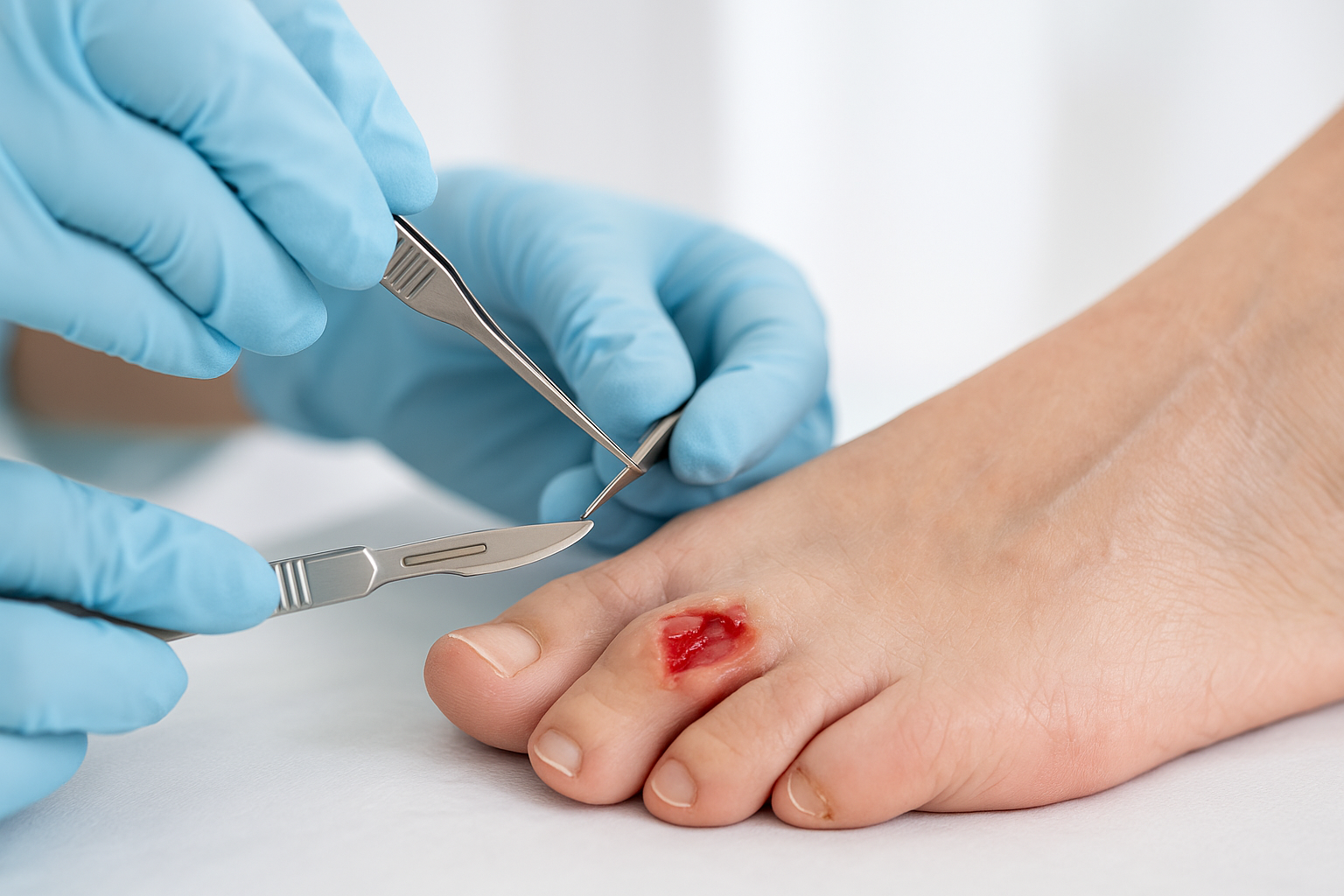
Sharp debridement is a clinical procedure that involves using sterile instruments—such as scalpels, curettes, or scissors—to remove dead, damaged, or infected tissue from a wound. Unlike other forms of debridement that rely on chemical, mechanical, or natural processes, sharp debridement allows a trained medical provider to precisely target non-viable tissue while preserving healthy tissue.
This method is commonly performed in wound care clinics, hospitals, and outpatient settings by physicians, podiatrists, and specially trained wound care professionals.
Why Debridement Is Essential for Wound Healing
For a wound to heal properly, it must move through several biological phases: inflammation, tissue formation, and remodeling. When dead tissue (also called necrotic tissue) remains in the wound bed, it can:
- Delay healing
- Increase the risk of infection
- Block healthy tissue growth
- Prevent accurate wound assessment
Sharp debridement helps “reset” the wound by removing barriers to healing and stimulating the body’s natural repair processes.
The Main Types of Sharp Debridement
There are different types of sharp debridement used in wound care, depending on the severity of the wound and the amount of tissue that needs to be removed.
1. Conservative Sharp Debridement
Conservative sharp debridement involves the careful removal of loose, non-viable tissue using sterile instruments. This approach is typically performed at the bedside or in an outpatient clinic setting.
It focuses only on clearly dead or damaged tissue and does not extend into deeper, healthy structures. Conservative sharp debridement is commonly used for:
- Chronic ulcers
- Diabetic foot wounds
- Pressure injuries
- Venous leg ulcers
Benefits of Conservative Sharp Debridement
- Quick and targeted removal of necrotic tissue
- Minimal disruption to healthy tissue
- Can be performed in an outpatient setting
- Encourages faster progression to healthy granulation tissue
2. Surgical Sharp Debridement
Surgical sharp debridement is a more extensive procedure typically performed in an operating room or procedural setting. It may involve removing larger amounts of tissue, including deeper layers, when infection or necrosis is severe.
This type of sharp debridement is often necessary for:
- Deep or extensive infections
- Rapidly spreading tissue damage
- Complicated diabetic wounds
- Traumatic injuries
Benefits of Surgical Sharp Debridement
- Rapid removal of extensive non-viable tissue
- Helps control severe infection
- Allows thorough visualization of the wound bed
- May prevent further tissue damage or complications
3. Serial Sharp Debridement
Some wounds require serial sharp debridement, meaning the procedure is repeated over time as part of an ongoing treatment plan. Chronic wounds often accumulate non-viable tissue gradually, making periodic removal necessary.
This approach ensures the wound bed remains clean and optimized for healing throughout the recovery process.
Benefits of Serial Sharp Debridement
- Maintains a healthy wound environment
- Supports consistent healing progression
- Reduces biofilm buildup
- Improves effectiveness of advanced wound therapies
Key Advantages of Sharp Debridement in Wound Care
Among all debridement techniques, sharp debridement offers several distinct advantages that make it a preferred option in many clinical situations.
Precision and Control
Sharp instruments allow providers to selectively remove non-viable tissue while protecting healthy structures. This precision is especially important in delicate or high-risk areas.
Immediate Results
Unlike enzymatic or autolytic debridement, which can take days to show progress, sharp debridement produces immediate visible improvement in the wound bed.
Improved Wound Assessment
Removing necrotic tissue exposes the true depth and condition of the wound. This enables more accurate staging, better treatment planning, and improved monitoring of healing progress.
Enhanced Effectiveness of Advanced Therapies
Advanced treatments such as cellular tissue allografts, hyperbaric oxygen therapy, and specialized dressings work best when applied to a clean, well-prepared wound bed. Sharp debridement helps optimize the wound surface for these therapies.
What to Expect During a Sharp Debridement Procedure
Before performing sharp debridement, a healthcare provider will assess the wound and determine the most appropriate approach. Depending on the wound and patient comfort, a topical or local anesthetic may be used.
The provider then carefully removes non-viable tissue using sterile instruments. After the procedure, the wound is cleaned and dressed appropriately. Follow-up visits may be scheduled, especially if serial sharp debridement is part of the care plan.
Is Sharp Debridement Right for Every Wound?
While sharp debridement is highly effective, it may not be suitable for every patient or wound type. Factors such as circulation, bleeding risk, overall health, and wound severity must be carefully evaluated. A qualified wound care specialist will determine whether sharp debridement is the safest and most effective option.
Final Thoughts: Why Sharp Debridement Matters
Understanding the types of sharp debridement and their benefits highlights just how critical this procedure can be in advanced wound care. Whether performed conservatively, surgically, or in a serial approach, sharp debridement helps remove barriers to healing and supports the body’s natural repair processes.
For individuals dealing with chronic or complex wounds, timely and appropriate debridement can make a significant difference in recovery outcomes. If you’re facing a non-healing wound, consulting with a wound care specialist about sharp debridement may be an important step toward faster, healthier healing.